Creatively Charged: a Designer's Toolkit to Amplify Creative Practice
Creatively Charged: a Designer's Toolkit to Amplify Creative Practice
While creativity ebbs and flows regularly and can be elusive, designers face pressure to be continuously creative, under strict restrictions and deadlines. This creates the need to explore ways a creative state of being can be stimulated or generated at will.
This kit has been desgined to help designers explore and sustain their creative states. It can be used to delve deeper into creative tendencies, see designs from a new perspective, inspire new ideas or just just creative juices flowing.
A creative state of being is where you have creative energy, agency and flow. Focusing on these aspects I have developed a designer’s toolkit. Promoting the ideas of small c creativity (everyday creativity and curiosity) and a reflective lens the toolkit aims to cultivate intentionality and continuous engagement over time.
To sustain that engagement over time, the design is based on the principle of the carryover effect of success, the idea that once you get a win, no matter how small, it carries the momentum to the next win and so on. It also builds of the idea of a flow state which is a state of being completely absorbed in an activity.
Components of the Kit:
A Designer's Bag
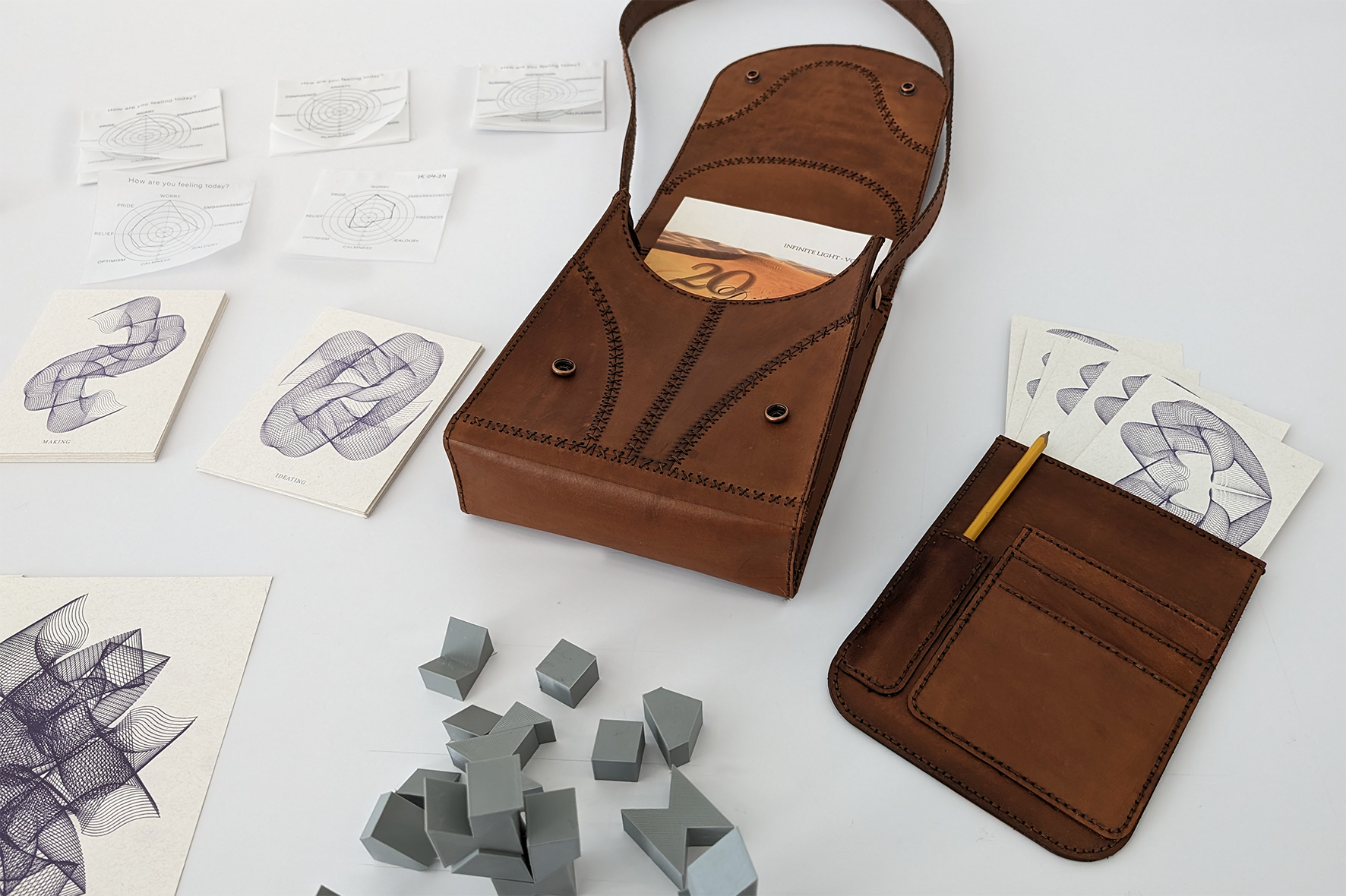
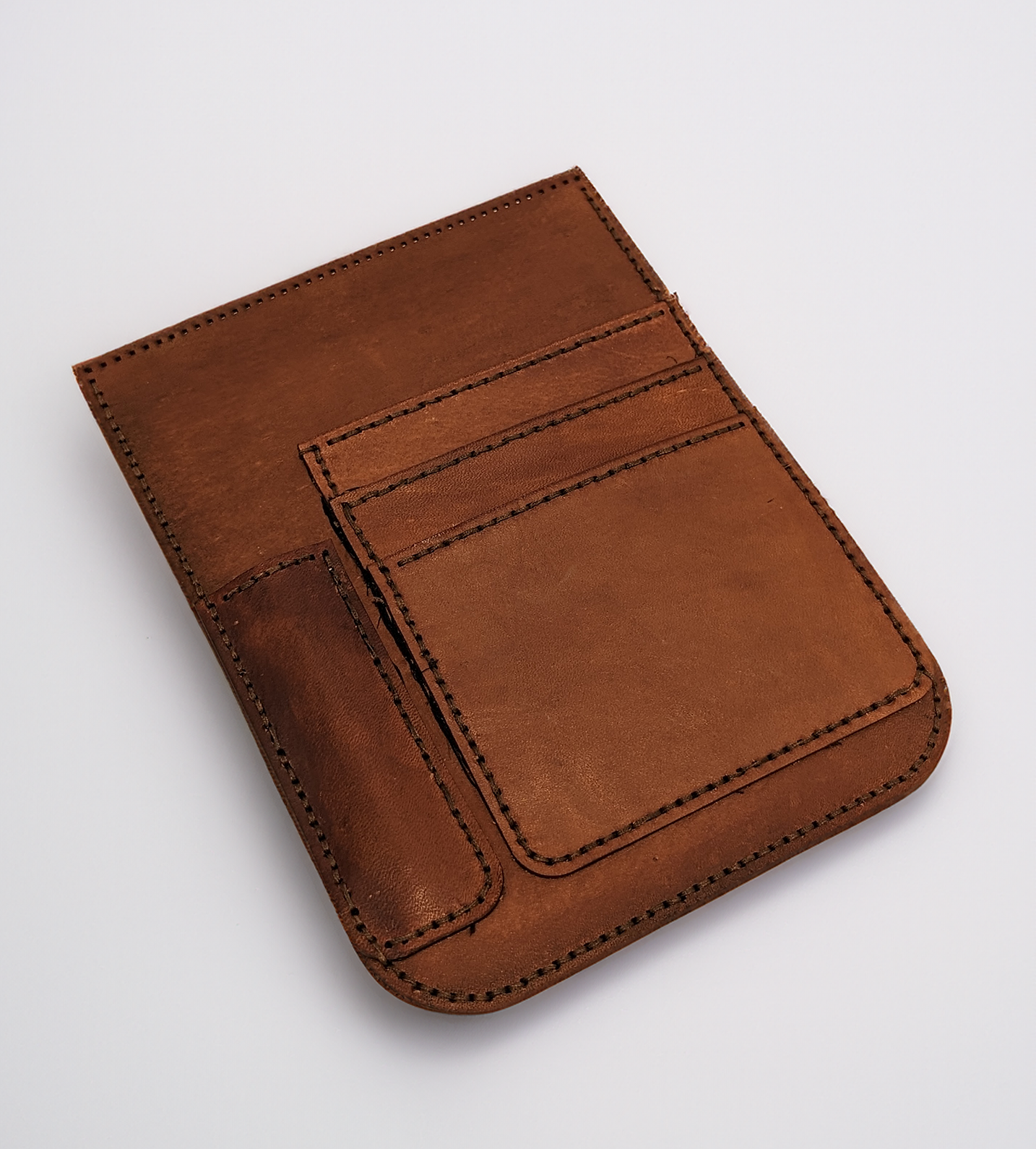
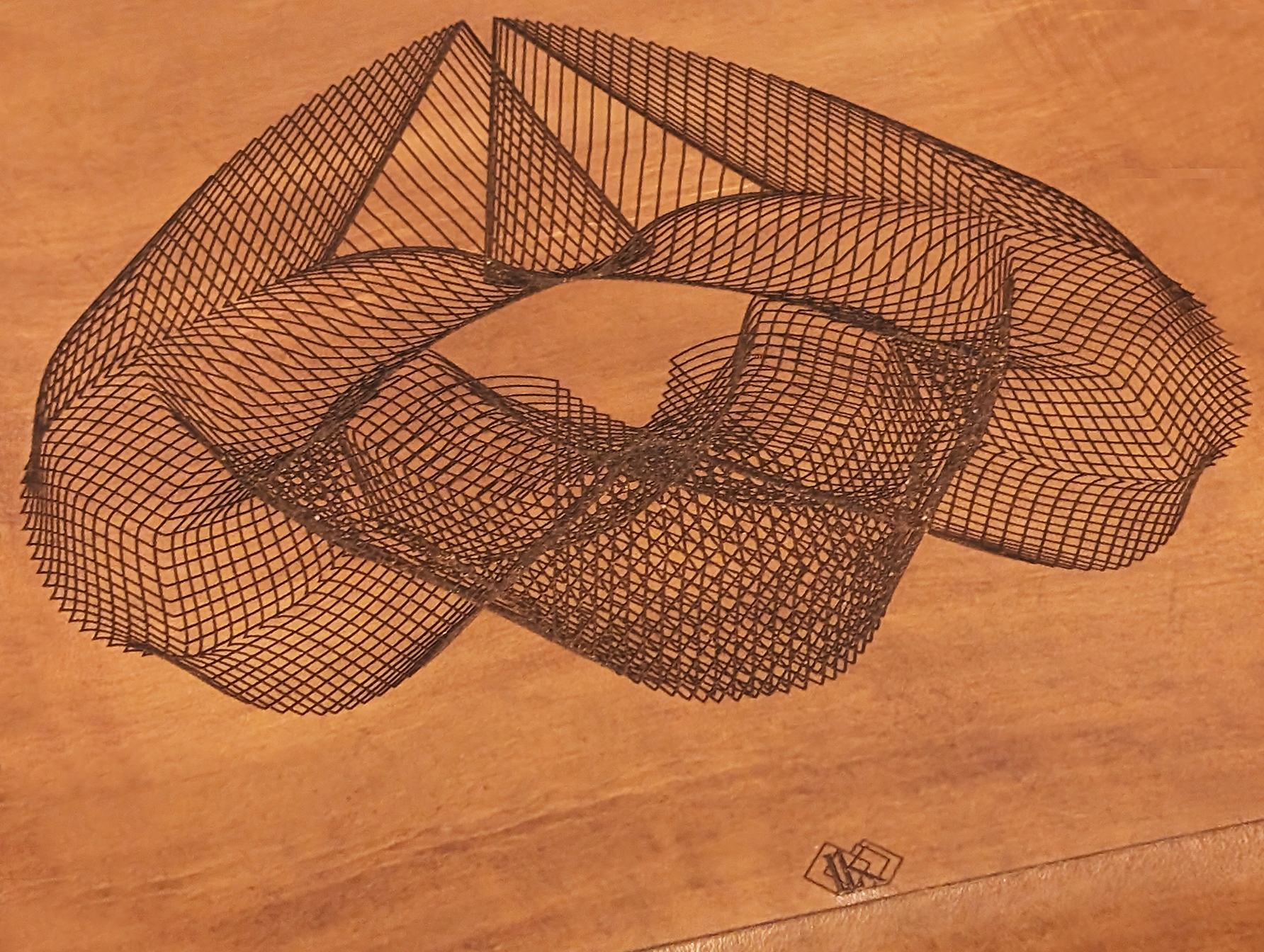
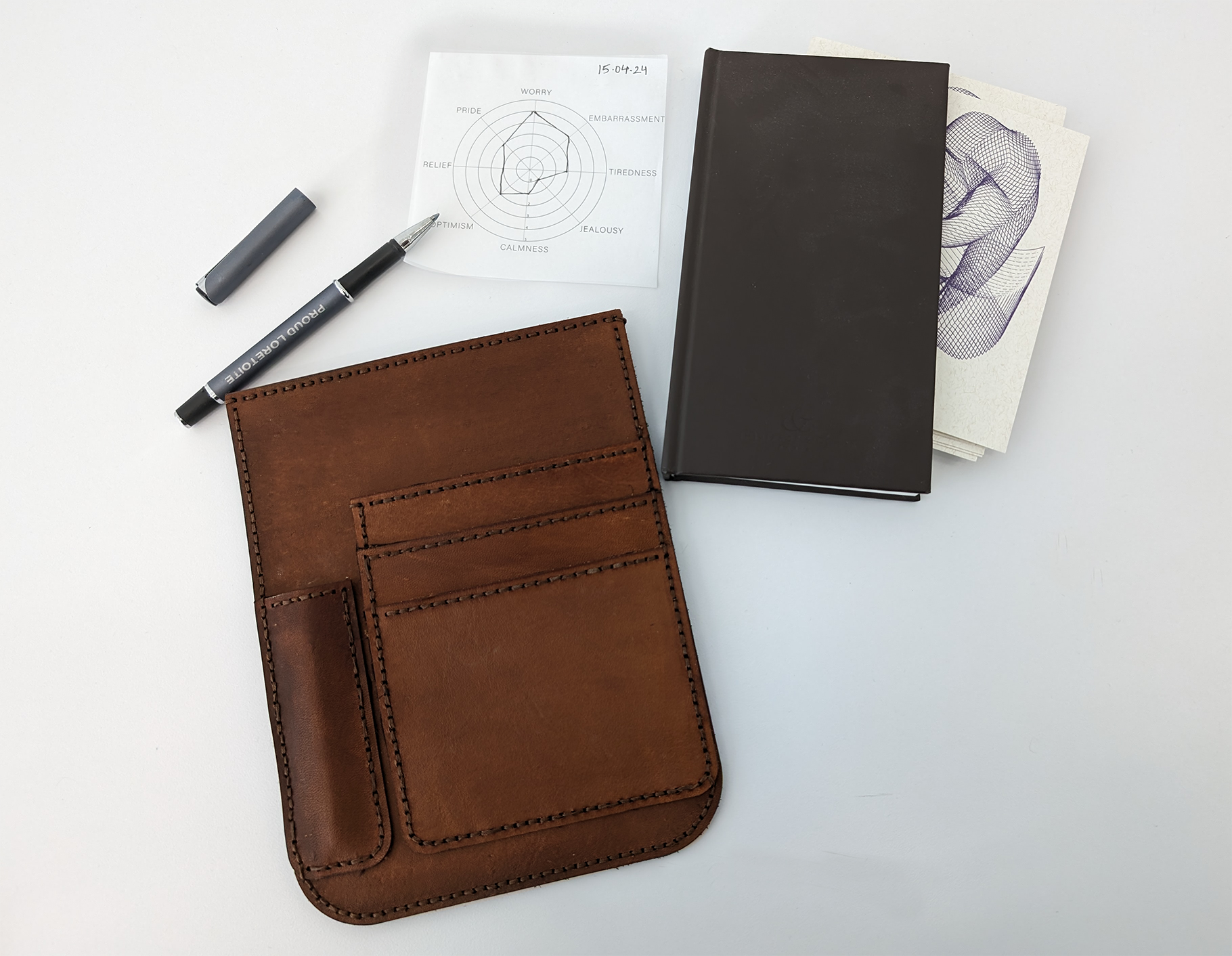
A hand-crafted genuine leather bag which has exquisite detailing like the laser engraved design, decorative stitching, complex piecing and a detachable pocket. It is meant to embody the elegance of a designer’s work bag. The bag also features a detachable pocket using snaps.
Blocks and Puzzles
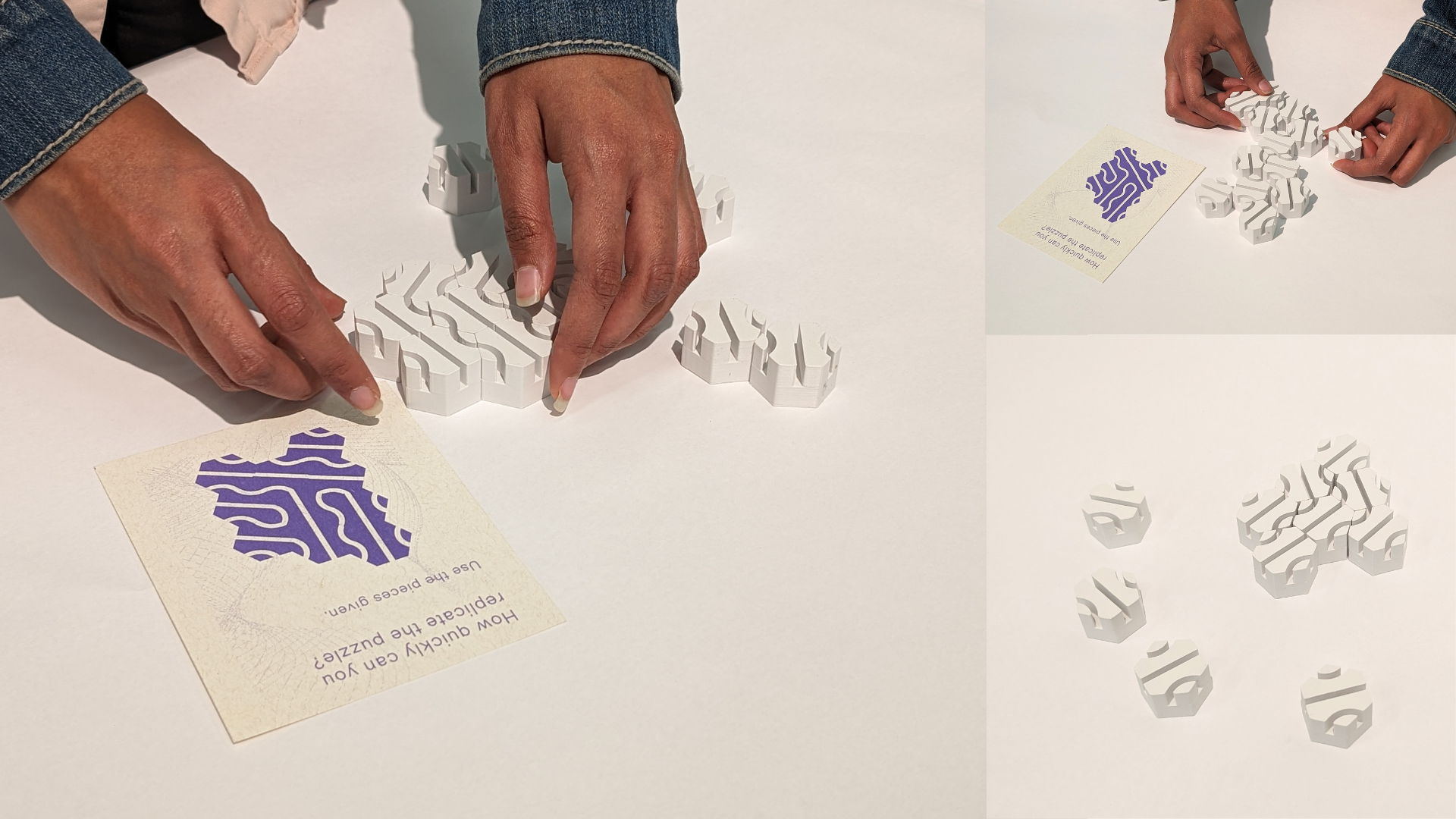
The blocks and puzzles facilitate small making.I focused on the tactility, auditory and engagement aspects of the puzzles and blocks.
The puzzle pieces were 3-d printed using ASA so that they had structure and made an audible sound. The blocks, however, were made of TPU allowing them to be slightly squishy while retaining their shape, creating an interesting sensorial experience.
Cards and Post its
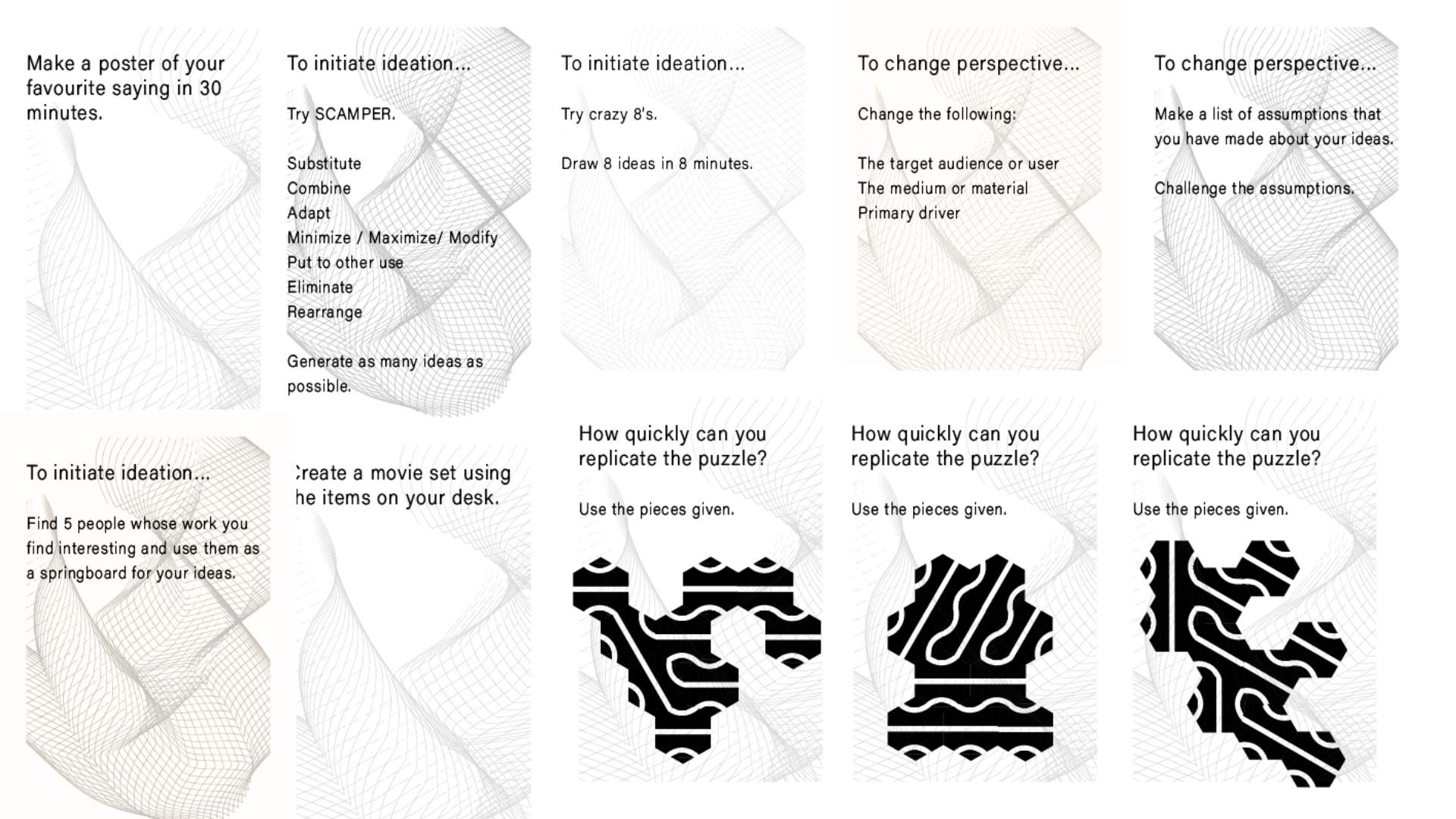
The prompt cards are a set of 48, categorized as reflecting, ideating and making cards. The activities on the cards are diverse, non-directive and do not require massive time or significant additional material. Additionally, I worked on the motifs, the paper quality, and the overall aesthetic to carefully curate each experience.
The spider maps are a reflective check in since people found it easier to use a spider map than answering a free response question. They are in the form of translucent post-its so that they can be stacked on top of each other, to track the emotions over time.
Methods
CREATIVE IMMERSION AND REFLECTION
Immersion is immersing yourself in an creative activity and environment. While immersion gives you unique experiences and perspectives reflecting on the experiences is what sparks insights.
2. SMALL MAKING
These are small acts of making consistently that keep us fueled as designers. This stems from the idea of small C creativity, the creativity that is routine or mundane. Can be done in 15-20 mins.
3.CONVERSATIONS
Connecting with fellow designers to understand how they fuel their creativity.
Key Skills
Research
Concept Development
After brainstorming I decided on 3 broad domains i.e. reflecting, ideating and making. The next step was brainstorming how to help designers in these 3 domains. What emerged was a set of cards, post-its, blocks, puzzles and a bag.
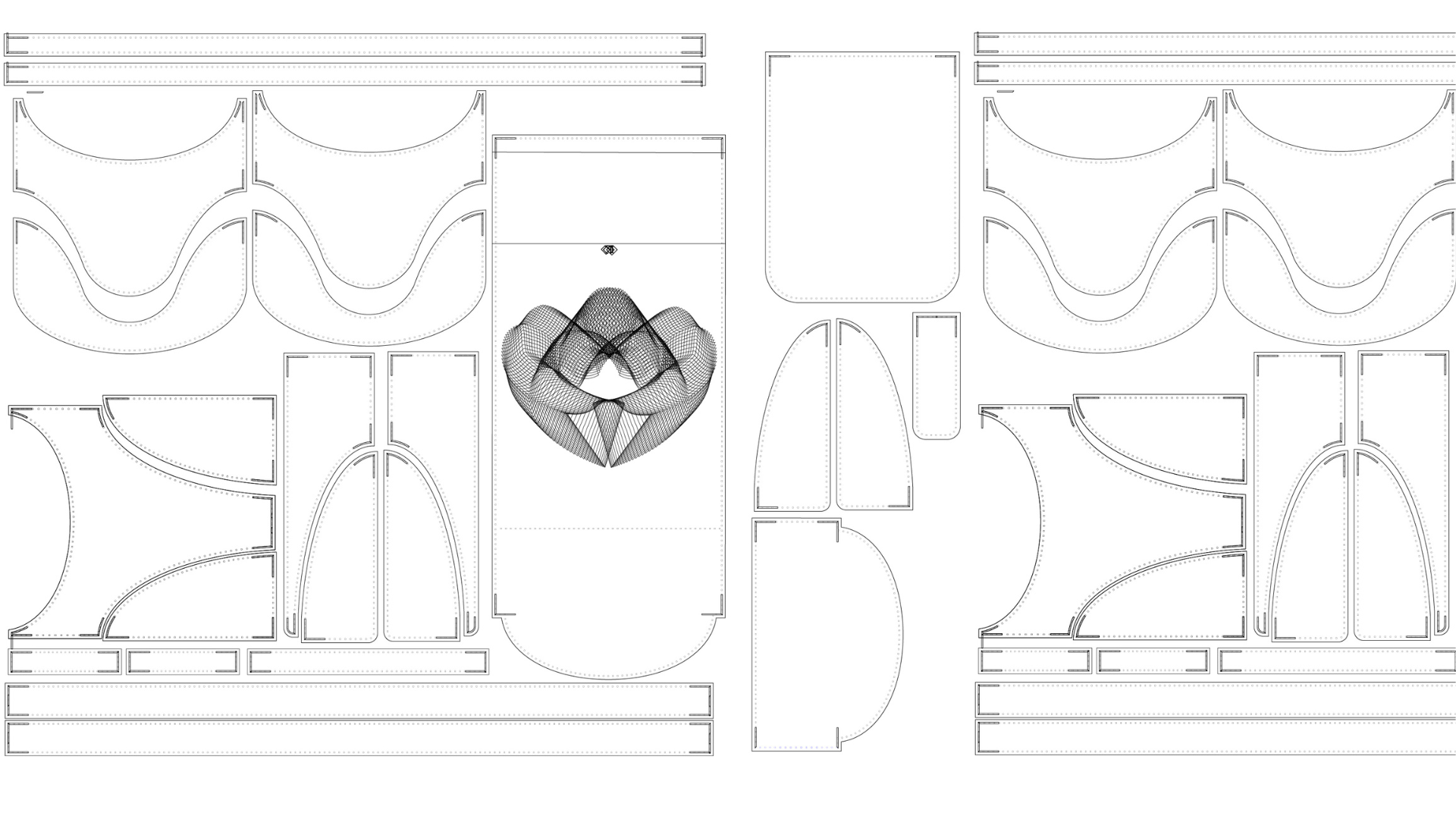
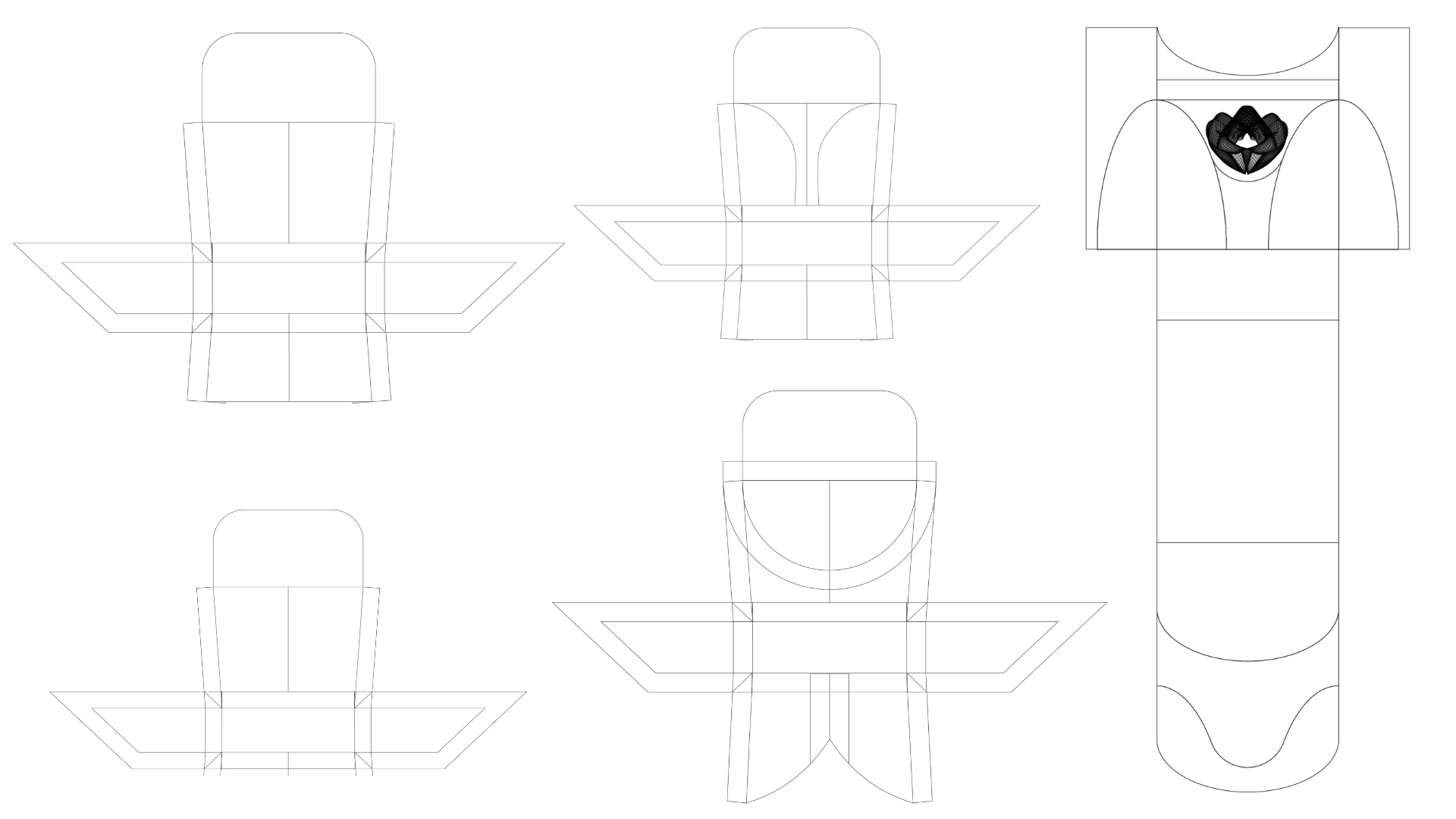
Pattern Making for Laser Cutting (Adobe Illustrator)
Multiple iterations of patterns on Adobe Illustrator.
Prototyping
Laser cut pattern pieces using veg tan leather, to achieve the intricate shapes and engraving.
The bag needed to be desirable, something designers would want to carry with them. This influenced the choice of hand-crafted genuine leather bag which has exquisite detailing like the laser engraved design, decorative stitching, complex piecing and the detachable pocket.
CAD Modelling and 3-D Printing
Key Considerations:
The blocks and puzzles should be engaging.
The tactility and auditory aspects of the puzzles and blocks were considered. Hence they were 3-D printed.
The blocks are made of TPU allowing them to be slightly sqishy. The puzzle pieces were made in ASA to provide structure.
The material along with the colour were decided after testing them.
Prototyping- Explorative Play
Communication
Key considerations:
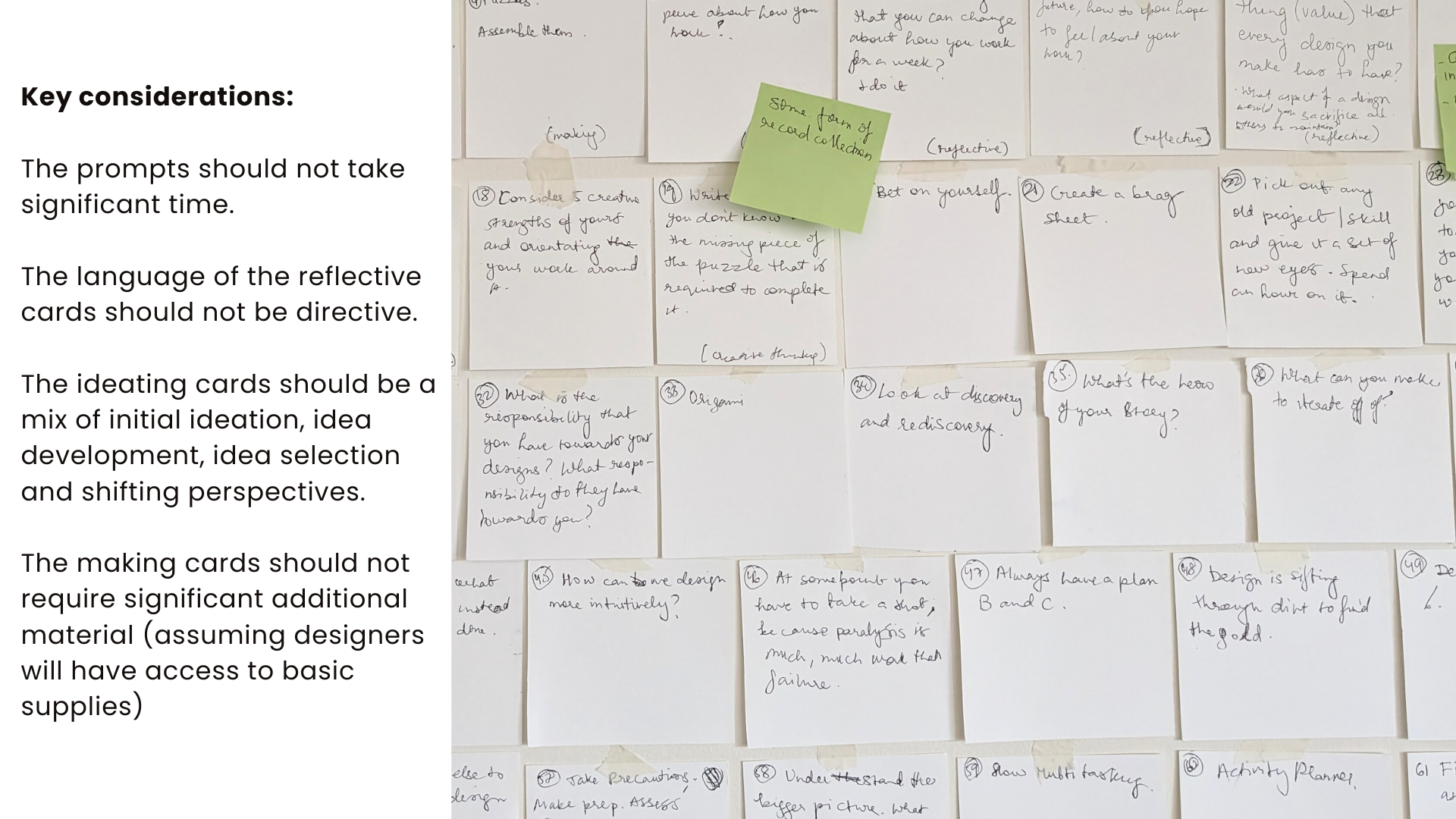
The prompts should not take significant time.
The language of the reflective cards should not be directive.
The ideating cards should be a mix of initial ideation, idea development, idea selection and shifting perspectives.
The making cards should not require significant additional material (assuming designers will have access to basic supplies)